



What Is Base Network, and How Do You Start Safely?
Base is an Ethereum Layer 2 network incubated by Coinbase. It aims to make on-chain applications cheaper and easier to use while staying connected to the Ethereum ecosystem.

Many beginners search for “what is Base network” only after something feels confusing in a wallet or DApp. This guide starts with a plain answer, then walks through a realistic scenario, practical checks, and common mistakes.
It is not financial advice, legal advice, or a security audit. Treat it as a beginner checklist that helps you slow down before you connect a wallet, sign a message, grant approval, bridge funds, or submit a transaction.
Plain Answer
Base is an Ethereum Layer 2 network incubated by Coinbase. It aims to make on-chain applications cheaper and easier to use while staying connected to the Ethereum ecosystem.
The Part Beginners Usually Miss
The essential idea is that Base is a network. Assets, gas, DApps, and transaction history need to be understood in the Base network context. ETH on Ethereum mainnet and ETH on Base may look similar in a wallet, but they sit on different networks. Before bridging or depositing, confirm source chain, destination chain, address, and official route.
Why This Matters
Beginners may meet Base in wallets, DApps, NFTs, payments, or DeFi apps. Understanding that it is a network helps prevent wrong-network confusion and bridge mistakes.
A Common Scenario
An app asks you to switch to Base. Before acting, confirm the app source, the network in your wallet, the gas asset needed, and whether you must bridge funds.
A Simple Decision Rule
Before using Base, confirm mainnet, address, gas, and official entry point.
Beginner Checklist
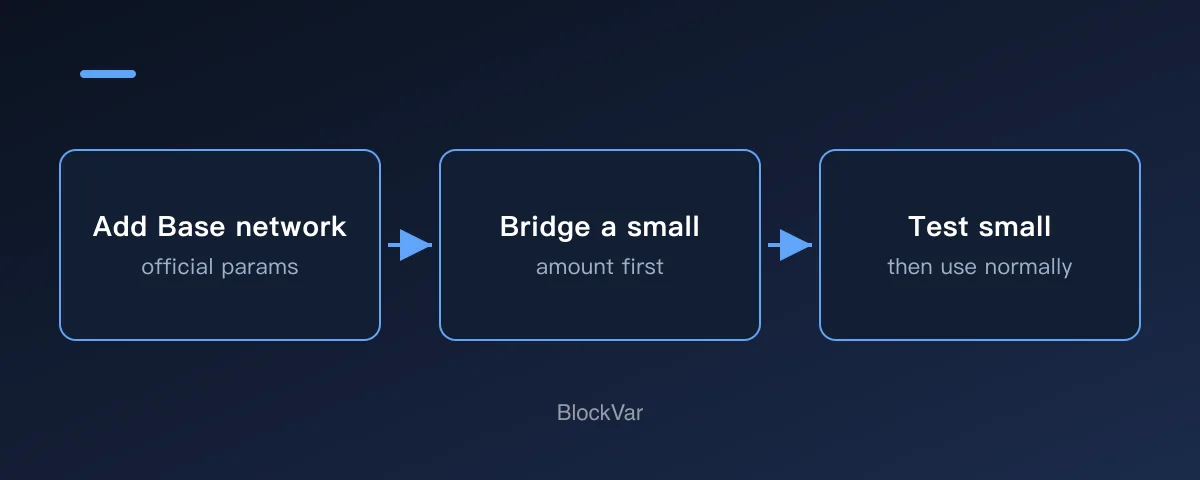
- Add Base from official Base docs or trusted wallet flows.
- Confirm you are on Base mainnet, not Base Sepolia or another chain.
- Use official bridge routes and test with small amounts.
- Still review approvals, signatures, and contract interactions inside Base apps.
For a first run on Base, try a small round trip: bridge in, then bridge back out. Learning the timing and cost of both directions makes every later transfer less uncertain.
Common Mistakes
- Treating low gas as low risk.
- Confusing Ethereum mainnet assets with Base network assets.
- Copying RPC or bridge links from random tutorials.
What to Do Next
Add the Base network in your wallet, move a small amount across, and confirm it arrives before doing anything larger. When bridging, pay attention to direction and timing: moving from Base back to mainnet does not take the same time as moving in.
Before you start using apps on Base, have an approval-checking tool ready. Gas is cheap on Layer 2, which means approvals happen more often and forgotten permissions accumulate faster than they do on mainnet.
Related Reading
- What Are Gas Fees in Web3, and Why Can Failed Transactions Still Cost Money?
- What Is a Transaction Hash, and How Do You Check It?
- How to Check a Web3 Project Before Connecting Your Wallet
- What Is a Cross-Chain Bridge? A First-Timer's Checklist
- How Do You Withdraw Assets from a Layer 2 to Mainnet or an Exchange?
- What Is an RPC Endpoint, and How Do You Switch It in Your Wallet?
- What Is a Testnet, and How Do You Get Test Tokens from a Faucet?
- Gas Too Expensive? Five Things That Actually Work (and Three That Don't)
References
- Base docs: Base: https://docs.base.org/get-started/base
- Base docs: Connecting to Base: https://docs.base.org/base-chain/quickstart/connecting-to-base
- MetaMask Base reference: https://docs.metamask.io/services/reference/base/
Keep reading
USDT on TRC20 or ERC20? Networks, Fees and Checks Before You Send
TRC20 and ERC20 are USDT on TRON and Ethereum. Addresses, fees and checks differ. Based on Tether, TRON and Ethereum docs: how to choose and what to check.

What Is Address Poisoning? Zero-Value Transfer Scams and How to Avoid Them
Address poisoning slips a look-alike address into your history with a zero-value transfer. How it works and how to avoid it, per MetaMask and Etherscan.
How to Claim Grass Stage 2 Rewards: USDC Steps, Deadline and Phishing Checks
Grass pays Stage 2 rewards entirely in USDC. Claims opened on July 22, 2026 and close on January 22, 2027. Check eligibility, how points convert, and how to claim only through the official dashboard.
How to Set Up a Binance Account: Regions, Verification, Security
Settle regional availability and verification tier before registering. Why funding carries more risk than fees, and four settings to finish on day one.
OKX Account vs Web3 Wallet: What to Settle Before You Start
One app holds two different things: a custodial exchange account, and a self-custodial Web3 wallet whose recovery phrase nobody can restore for you.
How to compare Web3 projects by purpose
Compare Web3 projects by purpose, costs, permissions and exit rules. Learn how networks, swap protocols and wallets differ, with a practical Base example.