



Rabby Wallet: Safety Checks and MetaMask Differences
Rabby is a self-custodial wallet built around Ethereum and EVM networks. This page examines its multi-chain workflow, pre-signing checks, open-source repository, and who should use it.

Rabby Wallet is a self-custodial wallet designed around Ethereum and EVM-compatible networks. Its strongest pitch is not simply “more chains.” It tries to reduce friction when moving between EVM networks while showing users more information before they approve a transaction.
Short verdict: Rabby is worth testing if you regularly use DeFi across several EVM networks and want clearer pre-signing information. It is less compelling if you only receive an occasional payment or spend most of your time on non-EVM networks.
Rabby’s official homepage positioning. Checked on 18 July 2026.
What the public product pages reveal
Rabby’s homepage is unusually specific about its scope: Ethereum and EVM networks. That clarity is useful. A wallet supporting one EVM chain does not automatically make it suitable for Solana, Bitcoin, or every network that appears in a token transfer menu.
The main navigation places downloads next to a help center, integration documentation, and Rabby Kit. That suggests two intended audiences: people using the wallet and developers adding wallet connectivity to an application.
The browser extension also has a public GitHub repository. At the time of review, the repository showed recent commits and releases. Open source does not prove that a wallet is bug-free, but it gives researchers a place to inspect changes, reported issues, and release activity instead of relying only on marketing claims.
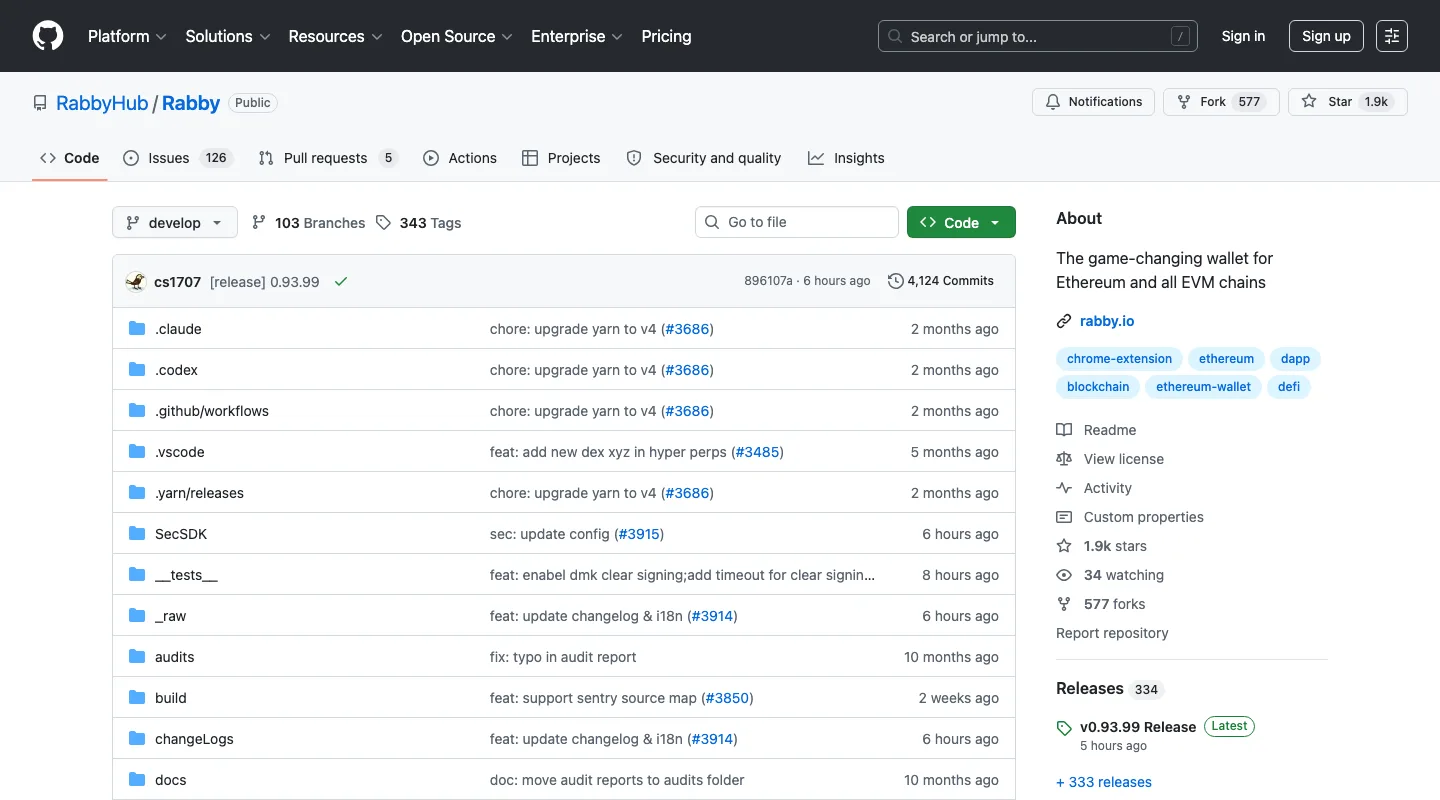
The public RabbyHub/Rabby repository. Repository activity changes over time.
Where Rabby stands out
Rabby emphasizes automatic network recognition, transaction simulation, risk checks, and an estimated balance change before signing. These features address a real EVM usability problem: a wallet request may contain several contract calls that are difficult to understand from a button label alone.
However, a warning or simulation is not a guarantee. A malicious contract may still be dangerous, data sources may be incomplete, and a user can still approve the wrong address or an excessive allowance. The value of the interface is that it can create an extra review moment—not that it replaces judgment.
Rabby vs MetaMask
Rabby is more explicitly optimized for a multi-network EVM and DeFi workflow. MetaMask has a longer history, wider recognition across DApps, and a much larger body of setup documentation.
That does not make one wallet universally safer. The practical decision is about your workflow:
- Choose Rabby for a small test if cross-network EVM activity and pre-signing visibility are priorities.
- Keep using an established wallet if it already supports your applications and you do not need Rabby’s additional workflow.
- Do not import the seed phrase of a high-value wallet merely to compare interfaces. Create a separate test wallet instead.
See also: MetaMask explained.
Safety checklist before installing
- Start from rabby.io, not a search advertisement or a direct-message link.
- Check the publisher and permissions on the browser-extension store page.
- Create a low-value test wallet rather than importing your main recovery phrase.
- Verify the active network, destination contract, token allowance, and expected balance change.
- Treat Connect, Sign, Approve, Permit, and Send as different actions.
- If using a hardware wallet, verify details on the hardware device—not only in the browser popup.
Who should skip it
Rabby is not the obvious choice for someone whose primary ecosystem is not EVM-based. It is also a poor starting point for a beginner who does not yet understand recovery phrases, token approvals, or network selection. More interface information only helps when the user knows which details matter.
Sources and review method
This review used public pages and the public source repository. We did not import a wallet, connect a real account, or submit a transaction. Last verified: 2026-07-18T00:24:00+08:00. This page is educational and is not an endorsement or investment recommendation.
Keep reading
Is There a MetaMask Airdrop? Rewards After Season 1 and the $MASK Question
MetaMask says there are no current plans for a $MASK token, and Rewards Season 1 has ended. What Rewards offers now and how to spot fake airdrops.

Wallet Hacked? What to Do First, Step by Step
After a wallet hack, find the cause first: a leaked seed phrase means a new wallet; abused approvals mean revoking. The steps, per MetaMask and Revoke.cash.
What Is Address Poisoning? Zero-Value Transfer Scams and How to Avoid Them
Address poisoning slips a look-alike address into your history with a zero-value transfer. How it works and how to avoid it, per MetaMask and Etherscan.
Is Abstract Global Wallet Safe? Where the Keys of an Email-Login Wallet Live
Abstract Global Wallet lets you sign in with email, a social account or a passkey. From the official architecture docs: how the smart-contract wallet works, how its key is split into three shards, what recovery depends on, and the risks of session keys and cross-chain transfers.
How to Set Up a Binance Account: Regions, Verification, Security
Settle regional availability and verification tier before registering. Why funding carries more risk than fees, and four settings to finish on day one.
OKX Account vs Web3 Wallet: What to Settle Before You Start
One app holds two different things: a custodial exchange account, and a self-custodial Web3 wallet whose recovery phrase nobody can restore for you.