



Safe Multisig Wallet: M-of-N Setup and Key Risks
Safe is a smart-contract wallet that can require multiple signers to approve a transaction. Learn how M-of-N thresholds work, when multisig helps, and where setup mistakes create risk.

Safe is a smart-contract wallet commonly used to manage onchain assets with more than one signer. Its defining feature is not the dashboard. It is the approval rule that determines when a transaction can execute.
For example, three stakeholders can configure a Safe as 2-of-3. Any transaction then needs approval from at least two of those three signer accounts. Compromising one signer is not enough to move the funds.
Short verdict: Safe is useful for project treasuries, DAOs, operating funds, and individuals who need separation of duties. It is not automatic insurance. A poor signer or threshold design can still lock funds or allow the wrong people to act.
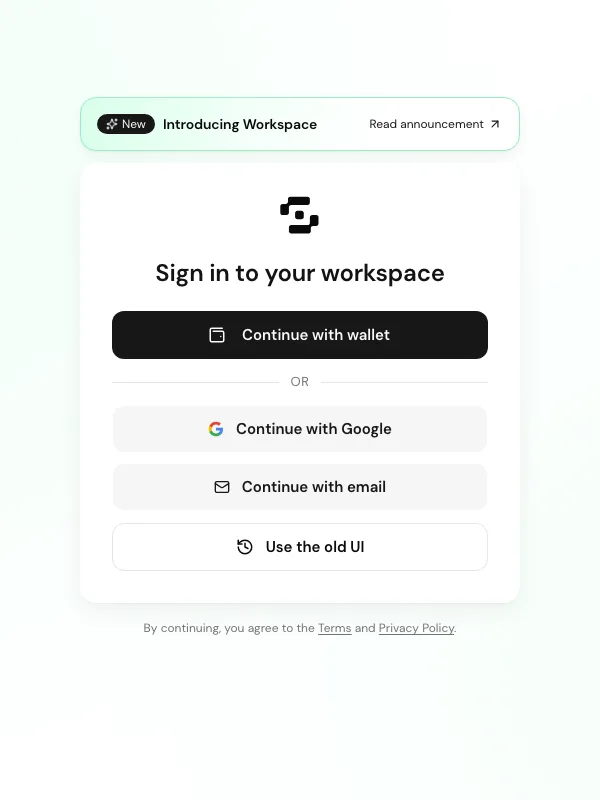
The public Safe workspace entry page. No wallet was connected. Checked on 18 July 2026.
The Safe address and signer wallet are different
Creating or operating a Safe begins with a signer wallet. That wallet stores a signer key used to create the Safe, approve a proposal, or execute a transaction. The Safe itself is a separate smart-contract account with its own address.
Connecting MetaMask or a hardware wallet therefore does not mean the treasury assets sit in that signer account. The Safe address holds the assets; the signer account controls one part of the authorization policy.
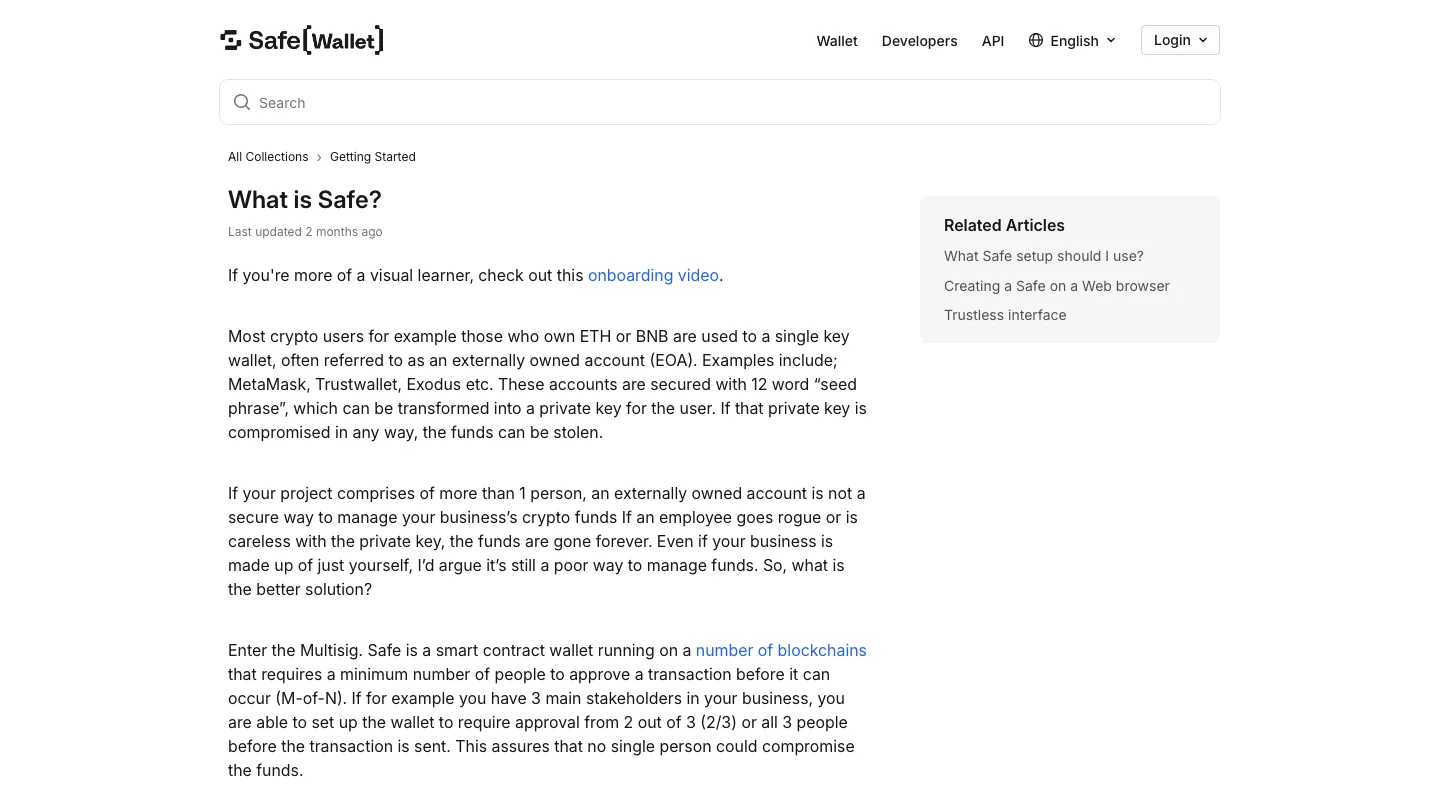
Safe’s official “What is Safe?” article explaining the multisig model.
How M-of-N changes the risk
- N is the total number of authorized signers.
- M is the minimum number of approvals needed.
- A 2-of-3 setup prevents one signer from acting alone.
- A 1-of-3 setup is convenient but preserves a single-key path to execution.
- A 3-of-3 setup is strict, but one unavailable signer can stop every transaction.
There is no universal best threshold. A team should decide who proposes routine payments, who reviews them, how signers are replaced, what happens when a device is lost, and how an emergency is coordinated.
What the current interface suggests
The current public app opens with a Workspace sign-in flow and displays wallet, Google, email, and legacy-interface options. That creates an important distinction: the method used to access a workspace is not the same thing as the onchain authorization policy.
Whether assets can move still depends on the Safe’s signer list, threshold, and any additional modules. Users should not interpret a familiar login method as proof that a transaction has been independently approved.
Safe’s creation guidance also distinguishes creating an account from deploying it onchain. A “pay later” path does not mean a multisig can operate forever without deployment or network fees.
Setup checklist
- Give each signer an independent device and wallet. Do not duplicate one recovery phrase across “different” signers.
- Consider a hardware wallet for at least one signer and document a realistic backup process.
- Rehearse proposal, confirmation, and execution with a test network or a very small amount.
- Verify the network, Safe address, signer addresses, and threshold before funding it.
- Practice signer replacement and loss scenarios before an emergency.
- Treat modules and embedded Safe Apps as additional permission surfaces.
- Separate a high-frequency operating account from a more restrictive reserve treasury when appropriate.
When multisig fails to add real protection
One person controlling every signer from one laptop does not create meaningful operational separation. Storing all recovery phrases in the same cloud document simply relocates the single point of failure.
An unnecessarily high threshold can also harm availability. Security includes preventing unauthorized transfers and ensuring authorized users can still act when required.
Sources and review method
- Safe official website
- Safe app
- What is Safe?
- Creating a Safe in a web browser
- Related: MetaMask explained
This guide reviewed public pages and official documentation. We did not connect a wallet or deploy an account. Last verified: 2026-07-18T00:22:00+08:00. Multisig reduces some single-key risks but does not remove smart-contract, configuration, or human-process risk.
Keep reading
Is There a MetaMask Airdrop? Rewards After Season 1 and the $MASK Question
MetaMask says there are no current plans for a $MASK token, and Rewards Season 1 has ended. What Rewards offers now and how to spot fake airdrops.

Wallet Hacked? What to Do First, Step by Step
After a wallet hack, find the cause first: a leaked seed phrase means a new wallet; abused approvals mean revoking. The steps, per MetaMask and Revoke.cash.
What Is Address Poisoning? Zero-Value Transfer Scams and How to Avoid Them
Address poisoning slips a look-alike address into your history with a zero-value transfer. How it works and how to avoid it, per MetaMask and Etherscan.
Is Abstract Global Wallet Safe? Where the Keys of an Email-Login Wallet Live
Abstract Global Wallet lets you sign in with email, a social account or a passkey. From the official architecture docs: how the smart-contract wallet works, how its key is split into three shards, what recovery depends on, and the risks of session keys and cross-chain transfers.
How to Set Up a Binance Account: Regions, Verification, Security
Settle regional availability and verification tier before registering. Why funding carries more risk than fees, and four settings to finish on day one.
OKX Account vs Web3 Wallet: What to Settle Before You Start
One app holds two different things: a custodial exchange account, and a self-custodial Web3 wallet whose recovery phrase nobody can restore for you.